



If you're planning a trip to the Alps, a city break in Zurich, or a ski week in Verbier, you've probably started looking at a Switzerland eSIM comparison before you even book your flight. Good move. Switzerland looks like any other European country on the map, but when it comes to mobile data, it plays by a completely different set of rules.
I've travelled through Switzerland several times for work, camera bag on my back, and I've made every roaming mistake there is to make. This guide covers what actually matters: coverage, how many GB you need, and how to compare travel eSIMs properly before your trip.
Why Switzerland Sits Outside Standard Roaming Rules
Here's the bit almost everyone gets wrong. Switzerland is not in the European Union, and it's not in the European Economic Area either. It never joined either bloc, despite being surrounded by EU countries on every side.
That matters because EU-style "roam like at home" rules only apply within the EU and the EEA. Switzerland has always sat outside that system, whether you're travelling with a UK network or an EU one.
What this means for your UK phone plan
Since Brexit, several UK networks have also brought back roaming charges for parts of the EU, so the whole "Europe is free" assumption doesn't hold up the way it used to anyway. Switzerland makes things worse, because it was never included in the first place, even before Brexit changed anything for UK travellers.
When you land in Zurich or Geneva, your phone will happily latch onto Swisscom, Sunrise or Salt, the three local networks. But your provider back home treats that connection as roaming outside Europe, exactly like it would in Thailand or the US.
In practice, that means:
- No data included, even on plans marketed as covering "Europe"
- Charges by the minute, by the text, and especially by the megabyte
- No automatic spending cap the way you'd get inside the EU
Some UK networks sell add-ons that specifically include Switzerland. It's worth checking your contract before you fly, but the default "EU roaming" bundle almost never stretches to cover it.
The border trap: Geneva, Basel and cross-border trains
I've watched my own phone flip onto a Swiss mast while still technically standing in France, just a few hundred metres from the border near Geneva. Basel does the same thing, sitting right where Switzerland, France and Germany meet.
Trains crossing into Switzerland are just as unpredictable. Your phone can switch networks mid-journey without any warning, and your billing switches with it.
If you're commuting across the border regularly rather than visiting once, an eSIM built for a single trip isn't really the right tool. I'll come back to that further down, because the answer is different for frequent crossers than for a one-off holiday.
Mobile Network Coverage in Switzerland: What to Expect

Once the roaming issue is out of the way, the good news is straightforward: Switzerland has one of the strongest mobile networks in Europe. I've shot photos in dozens of countries, and Swiss coverage genuinely sits near the top.
Swisscom, Sunrise and Salt: the networks behind your eSIM
Three main operators cover the country:
- Swisscom: the largest and most established network, generally the strongest choice in rural and mountain areas
- Sunrise: very solid coverage, particularly for 5G in bigger cities
- Salt: usually the most budget-friendly option, with reliable coverage in urban areas
Most travel eSIMs run on one of these three networks, and some switch between them automatically depending on signal strength. 4G reaches almost everywhere, and 5G is expanding quickly across cities and popular tourist spots like Zurich, Geneva, Lausanne and Interlaken.
Mountains, ski resorts, trains and tunnels: where it actually holds up
The question I get asked most before a ski trip is simple: does it work up the mountain? In my experience, yes, more often than not.
Switzerland has invested heavily in mountain coverage, mostly because Swiss residents themselves live and work in these areas all year round. Here's what I've found on the ground:
- In major resorts like Verbier, Zermatt or Crans-Montana, 4G reaches right up to the top of the lifts
- On standard train lines, signal holds up well, even through short tunnels thanks to repeaters
- On longer rail tunnels like the Gotthard, you can get brief dropouts, much like anywhere else in the world
- In remote valleys or high alpine terrain far from infrastructure, coverage can thin out
One thing people forget: Liechtenstein, the tiny principality tucked between Switzerland and Austria, runs its mobile network through the same three Swiss operators. If your eSIM works in Switzerland, it works in Liechtenstein too, no extra setup needed.
How Much Data Do You Actually Need in Switzerland?
This is the question I get most often. The honest answer depends far more on how you use your phone than on the country itself. Here are three usage profiles I always suggest people start from.
Data profiles: light use, active traveller and remote work
Light traveller
Maps, messages, the occasional photo
- GPS for getting around
- Messaging and calls over Wi-Fi
- Light social media use
Social media and GPS
Stories, constant navigation, light streaming
- Near-constant GPS navigation
- Photos and videos shared live
- Music or podcasts streamed on the go
Remote worker / digital nomad
Video calls, cloud tools, always-on connection
- Regular video calls
- Hotspotting a laptop
- Daily professional use
Watch out for throttling on some unlimited plans: speeds can drop sharply once you pass a certain volume.
Short trips, ski weekends and frequent border crossings
For a ski weekend or a three-day Geneva trip, I'd go for a small 10GB or less plan, plenty for maps, photos and some sharing. There's no point paying for data you'll never touch on a short break, so a plan built around 10GB and around 7 to 10 days validity usually does the job.
For frequent crossers, whether that's regular business trips or a partner who lives across the border, a one-off travel eSIM makes far less sense. In that case, a local Swiss SIM or a proper local contract is usually the smarter route, which I'll cover next.
To narrow down your needs, you can also use our data calculator.
eSIM vs Local Swiss SIM vs Your Usual Roaming Add-on
Once you understand the roaming problem, there are really three routes open to you, and they're not equally good depending on your trip.
Why a Swiss SIM or mobile contract isn't built for visitors
A standard Swiss mobile contract through Swisscom, Sunrise or Salt is designed for residents. That usually means:
- A contract with identity checks and paperwork
- A Swiss phone number to manage alongside your own
- Setup that's simply overkill for a short visit
For a holiday of a few days or weeks, that's a lot of hassle for no real benefit. If you're a genuine cross-border commuter, though, it's a different story: a stable local number and voice minutes matter more than they would on a one-off trip, so a local plan can actually win out.
eSIM vs prepaid Swiss SIM: what changes on the ground
You can still buy a prepaid Swiss SIM at a kiosk, train station or operator shop when you land. In practice, though, that comes with a few real downsides:
- You need to find a shop that's open when you arrive, not always easy outside the big cities
- You have to remove your own SIM and keep track of it somewhere safe
- Some operators ask for ID verification before activating it
An eSIM, on the other hand, installs before you even leave home. No physical card to swap, no queue at Geneva Airport or Zurich station. You scan a QR code from your sofa, and your Swiss data line is ready the moment you cross the border.
The trade-off worth knowing: most travel eSIMs are data-only. That means no Swiss phone number for regular calls or texts, but WhatsApp, FaceTime and Wi-Fi calling all work without a hitch.
How to Compare and Choose the Best Switzerland eSIM
Once you've settled on an eSIM, the next step is picking the right plan. This part is easier than it sounds, but a few details make a real difference.
What to filter for when you compare travel eSIMs
Whenever I compare travel eSIMs for a new destination, I look at the same handful of things:
- Network used: does the plan run on Swisscom's infrastructure, generally the strongest for rural and mountain coverage?
- Validity window: some Switzerland plans run for a set number of days, others stretch validity out to 180 days from activation, useful if your travel dates aren't fixed yet
- Hotspot allowance: check whether tethering is included if you're planning to share your connection
- Top-up options: can you add more data mid-trip without buying a whole new plan?
This is exactly what the comparison tool sitting above this guide is built to do. Rather than me listing prices that'll be out of date in a month, I'd rather you filter by your dates and data needs and let the tool pull in what's actually available right now.
Popular plans: 10GB, 20GB and unlimited options explained
Most Switzerland eSIM providers, whether that's Airalo, Holafly, Nomad, Saily or Maya, structure their catalogue around a handful of common sizes. A popular 10GB, 10 days plan tends to suit a typical week-long holiday. Larger 20GB and 30GB tiers suit longer trips or heavier streaming.
Unlimited plans do exist for Switzerland, but "unlimited" almost always comes with a fair-use cap where speeds get throttled after a certain point. If you're working remotely, read the fine print on data caps before assuming truly unlimited means unlimited.
How to Install and Activate an eSIM for Switzerland Travel
Once you've picked a plan through your Switzerland eSIM comparison, installing it is genuinely quick. A couple of details matter more than people expect, though.
Device compatibility and setup before you fly
Check your phone supports eSIM first. Most recent handsets do, including iPhones from the XS onward, plenty of Samsung Galaxy models, Google Pixels and recent Huawei devices. If your phone is unlocked and less than five or six years old, you're almost certainly fine.
For the setup itself:
- Buy your eSIM a few days before you travel, so you're not rushing the setup at the departure gate
- Install it over home Wi-Fi, never on UK mobile data at the last minute
- Only switch on the data line once you land in Switzerland, so you don't burn through your plan early
- Keep your regular UK SIM active alongside it, so you still get texts and calls as normal
Hotspot, top-ups and managing your plan mid-trip
Good news: nearly every travel eSIM supports hotspotting. You can tether a laptop or share your connection with a travel companion, exactly like you would with your usual SIM.
If you burn through your data before the trip ends, most providers, including Airalo, Saily and Nomad, let you top up directly from their app without reinstalling anything. Handy if you've underestimated how much you'd actually use, which happens more often than you'd think once you start sharing photos of the Matterhorn.
Why Use an eSIM for Travelling to Switzerland?
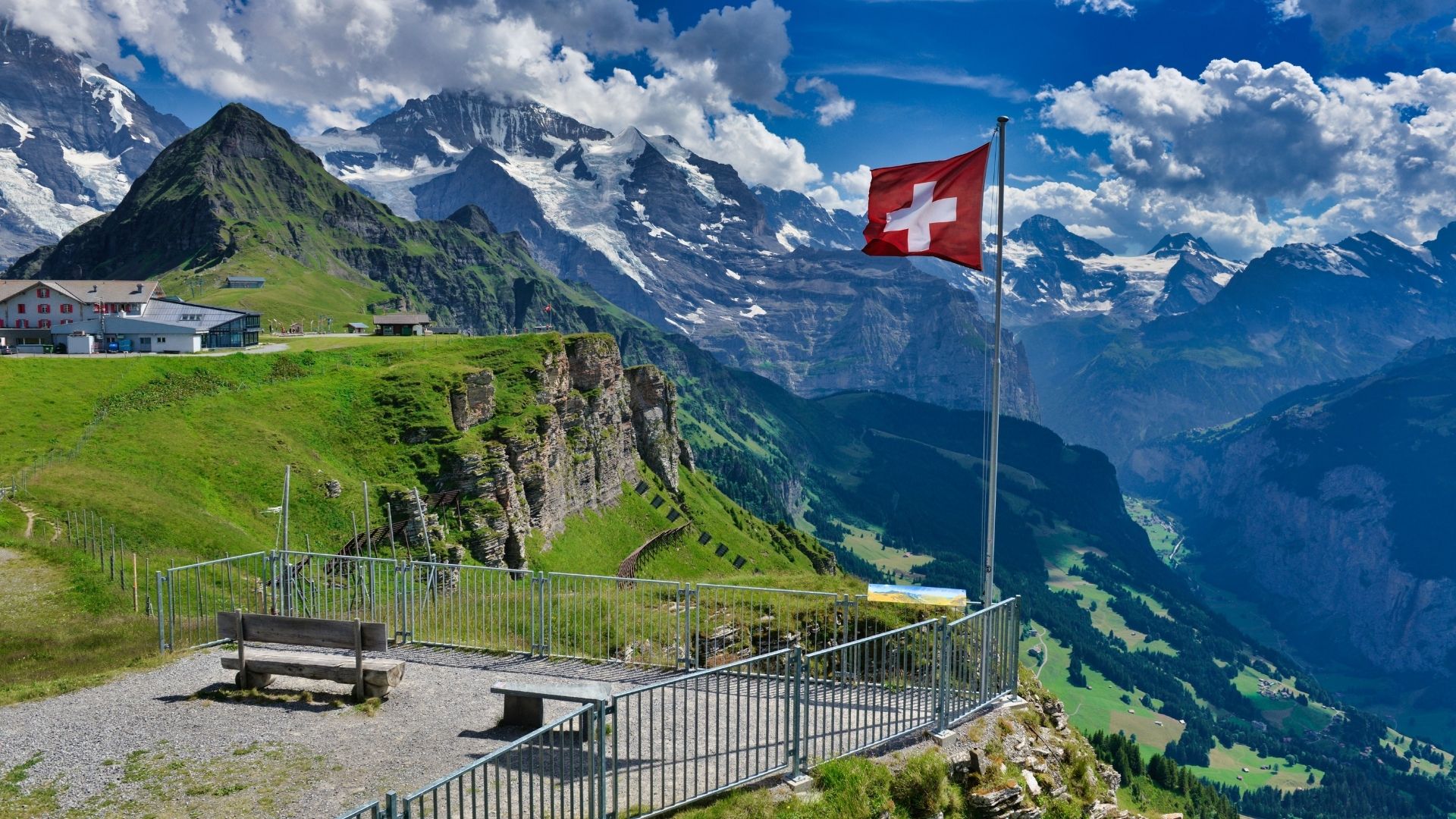
Having tested a handful of providers and compared coverage on the ground, here's my honest read on what actually works for a Switzerland trip.
The right plan for your kind of trip
- One-off holiday (weekend or week away): a standard 10GB to 20GB travel eSIM is plenty, and it installs in about five minutes before you fly
- Skier or mountain traveller: don't overthink it, 4G coverage is solid across nearly every Swiss resort
- Remote worker: look for a bigger data allowance or an unlimited plan, but double-check the throttling threshold first
- Cross-border commuter: a local Swiss SIM or contract usually beats a repeatedly renewed travel eSIM
Beyond data: keeping costs down while you're there
Data isn't the only expense that catches people out in Switzerland. Card fees and poor exchange rates add up fast in a country where a coffee can easily run past £5. A no-fee travel card, like a Wise card, is worth having in your wallet alongside your eSIM, so you're not losing money on both fronts.
Either way, the comparison tool above this guide is set specifically for Switzerland, pulling current data volumes, validity windows and pricing. Start from your travel profile, use the GB benchmarks above as a guide, and let the tool do the filtering. Prices shift often, so that's a far more reliable source than fixed numbers in an article.
