If you've ever scrambled for Wi-Fi in an airport just to buy a new eSIM, you'll know the pain. A rechargeable and reusable eSIM solves exactly that problem. But the term gets thrown around loosely, and not every provider means the same thing by it. Let me break it down properly, so you know what you're actually getting before you travel.
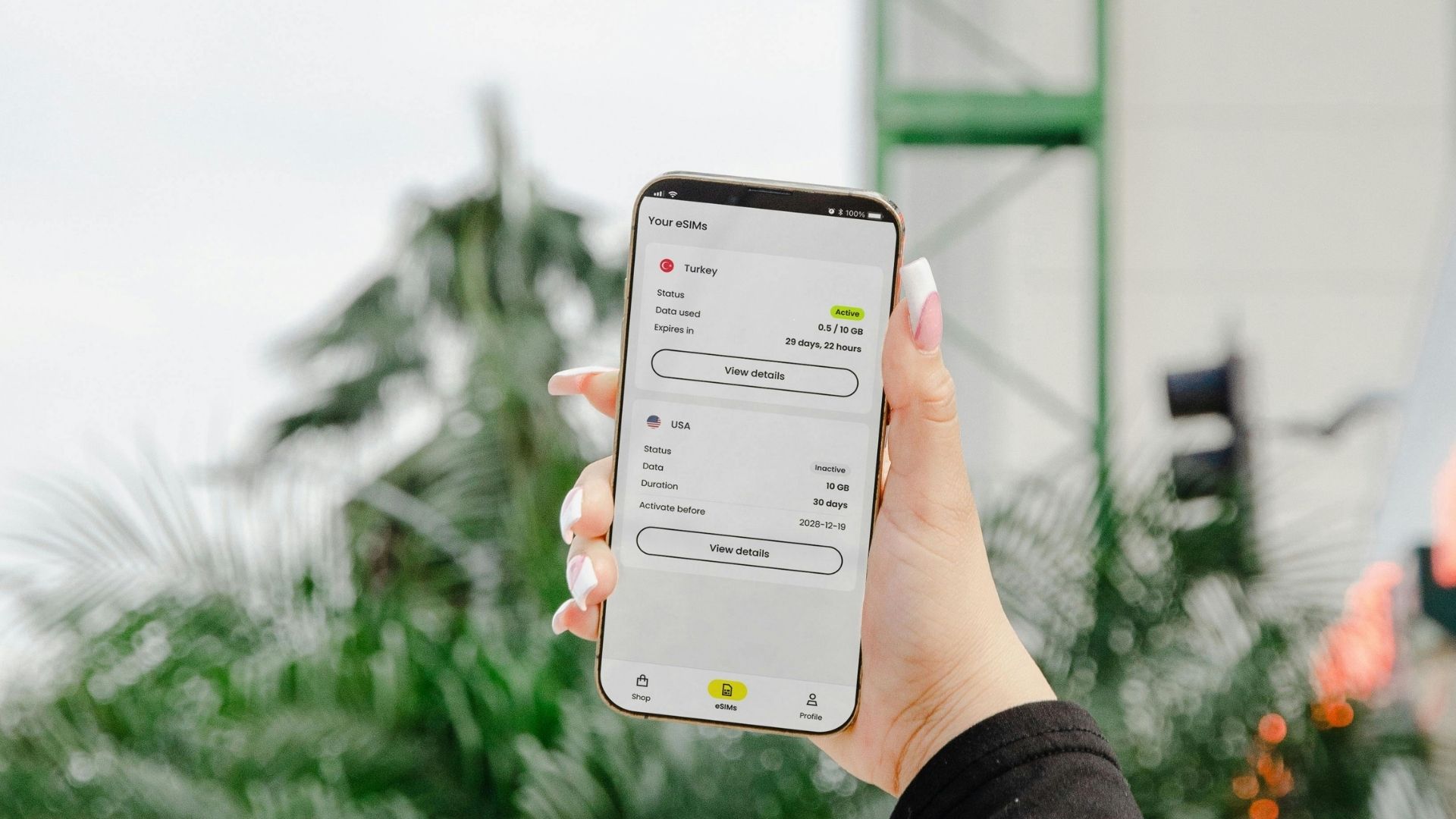
What "Rechargeable" and "Reusable" Actually Mean
These two words sound similar but describe two different things. Understanding the distinction will save you from a nasty surprise mid-trip.
Rechargeable: Top Up Without Reinstalling
A rechargeable eSIM is one where you can add more data when your allowance runs out, without touching your phone settings or scanning a new QR code.
You open the provider's app, pick a top-up, pay, and the data appears on your existing profile. It usually takes under a minute. No fiddling with SIM trays, no downloading a new profile.
This matters most when you're halfway through a trip and realise you've burned through your data faster than expected. Instant top-ups mean you're back online without breaking stride.
Reusable: One Profile, Multiple Trips
A reusable eSIM is one where your profile stays installed on your phone after a trip ends. When you travel again, you simply buy a new plan and it activates on the same profile.
Say you use an eSIM for a week in Japan. You get home, the plan expires, but the profile is still sitting in your phone. Two months later, you're heading to the US. You buy a compatible plan, and it activates directly. No new QR code, no reinstallation.
For frequent travellers, this is a genuine quality-of-life upgrade.
Why People Confuse the Two
They're related but distinct. Here's a simple way to tell them apart:
| Feature | What it means | What you actually do |
|---|---|---|
| Rechargeable | Add data to an active plan | Buy a top-up in the app |
| Reusable | Keep your profile for future trips | Buy a new plan without reinstalling |
A provider can offer one without the other. Some allow mid-trip top-ups but delete your profile when the plan expires. Others keep your profile indefinitely but don't let you add data to an active plan. The best providers offer both.
How to Top Up a Rechargeable eSIM
The Process, Step by Step
Topping up is straightforward when the provider supports it. Here's how it typically works:
- Open your eSIM provider's app or log into your account on their website.
- Select the active eSIM profile you want to top up.
- Browse the available data plans for your current destination.
- Add your chosen plan to the basket and confirm payment.
- The additional data is applied to your profile automatically, usually within seconds.
No phone restarts needed. No changes to your eSIM settings. It just works.
What Happens When You Hit Zero
When your data runs out, two things can happen depending on the provider.
Some cut your connection entirely until you top up. Others apply throttling, which means your speed drops to a very slow rate (think: just about enough for messages) rather than cutting off completely. Either way, if your provider supports recharging, you're back to full speed within minutes of topping up.
The key is knowing which scenario applies before you run out, not after.
Using the Same eSIM Profile Across Multiple Countries
Profile Kept vs. Profile Deleted: It Depends on the Provider
This is where providers differ most significantly, and where UK travellers often get caught out.
Some providers, like Airalo, work on a per-plan basis. Each destination or trip gets its own eSIM profile. When a plan expires, that profile is done. For your next trip, you install a fresh one.
Others, like Saily, keep a single profile active on your phone. You buy plans for different destinations through the app, and they activate on the same profile. If you're someone who takes four or five international trips a year, this approach is far less friction.
Neither model is wrong. But knowing which one your provider uses helps you plan properly.
The Credit-Based Model
Some providers use a prepaid credit system instead of fixed plans. You load a balance onto your account and spend it across destinations as you go.
Credits typically don't expire quickly, and they're not tied to a single country. You use some for a weekend in Amsterdam, save the rest for a trip to Thailand three months later. It's the closest thing to a traditional prepaid SIM, but fully digital.
This model suits travellers who don't always know their next destination in advance.
Honest Pros and Cons
Why a Rechargeable and Reusable eSIM Makes Sense
For UK travellers who go abroad regularly, the practical benefits are real:
- No physical SIM to buy, lose, or throw away at every destination.
- Instant top-ups from anywhere in the world, no airport kiosk needed.
- Keep your UK number active on your second SIM slot while using the eSIM for data.
- One profile for multiple trips means less setup time and fewer chances for installation errors.
- Less plastic waste, which is a small but genuine positive.
For businesses and groups travelling frequently, the ability to manage data plans remotely through an app is also a significant advantage over physical SIMs.
The Limitations Worth Knowing
I'd rather be straight with you on this than oversell it.
- Reusability isn't guaranteed. Some providers delete your profile at expiry. Check before you buy, especially if you're counting on using the same profile again.
- Unused data usually disappears. Most plans don't roll over unused data when they expire. Credit-based systems are the exception.
- Coverage varies by destination. A reusable profile doesn't mean every country is covered. Each plan has its own geographic scope.
- Calls and SMS are often not included. Most eSIM data plans are data-only. If you need a local number for calls, check whether the provider offers that or whether you'll rely on apps like WhatsApp instead.
- Plan validity is fixed. A 30-day plan expires in 30 days whether you've used the data or not. If your trip is shorter, you may lose what's left.
How to Choose the Right Provider
What to Check Before You Buy
Not all rechargeable and reusable eSIMs are equal. Before committing, here's what I look at:
- Is the profile kept after the plan expires? This determines whether the eSIM is genuinely reusable.
- Can you top up mid-plan? Or do you have to wait until the current plan runs out?
- Does unused data carry over? Important if your trip ends early.
- Which countries are covered? Make sure your next few destinations are in the list.
- How is the app? Managing top-ups and plans should be simple, not a support ticket.
- Is there 24/7 customer support? If something goes wrong at 2am in Bangkok, you need someone available.
A Note on Reddit and Community Reviews
If you search for rechargeable eSIM recommendations on Reddit, you'll find a lot of real-world feedback from travellers. Saily comes up regularly for its reusable profile model, where your eSIM stays in the app and you simply add a new plan for each destination. Other providers get praised for wide coverage or unlimited data, but the experience around recharging and reusing the same profile varies a lot from one to the next.
Community feedback is useful, but experiences vary by destination and device. Use it as a starting point, not the final word.
Use a Comparator to Find the Best Fit
Rather than visiting ten different provider websites and trying to cross-reference features manually, the easiest approach is to use a dedicated eSIM comparator.
You filter by destination, check which providers support top-ups and profile reuse, and compare options side by side. Head to our eSIM comparator to find the right plan for your next trip without the guesswork.